



Ms T Breedt (Free State: FF Plus) to ask the Minister of Forestry, Fisheries and the Environment:
(1) Whether, with reference to the following reports by the EMS Foundation (https://emsfoundation.org.za/the-status-of-south-africas-provincial-nature-reserves/) and 2023 by the Endangered Wildlife Trust and Wildlife and Environment Society of South Africa (https://ewt.org/wp-content/uploads/2023/04/Provincial-ReserveManagement-Report-2023-FINAL-Print.pdf), his department has (a) planned and/or (b) undertaken any actions to assist provincial reserves to fulfil their conservation objectives; if not, why not; if so, (i) what actions, (ii) what are the timelines and (iii) what are the further relevant details;
(2) Whether any considerations have been given as to how the failure of provincial reserves will affect the implementation of the National Biodiversity Economy Strategy with specific reference to the (a) optimisation of biodiversity-based business potentials across (i) the terrestrial, (ii) freshwater, (iii) estuarine and (iv) marine and coastal systems and (b) contribution to economic growth with (i) local beneficiation, (ii) job creation, (iii) poverty alleviation and (iv) food security; if not, why not; if so, what are the relevant details;
DOWNLOAD TO READ ALL THE QUESTIONS AND ANSWERS:
Minister Willie Aucamp Response:
“The Department of Forestry, Fisheries and the Environment (DFFE) is aware of the challenges, issues or findings presented in the Elizabeth Margaret Steyn (EMS) Foundation’s report. The report is an independent civil society initiative and has not been formally “legitimised” or adopted as an official government report. Accordingly, the DFFE cannot respond to or implement the recommendations contained in an external report that has not been adopted as an official government report.
A Ministerial Task Team (MTT) was appointed in August 2023 to investigate the challenges hindering Management Authorities (MAs) from fulfilling their conservation mandates and affecting the management efficacy of these vital protected areas. The specific mandate of the MTT investigated systemic challenges such as underfunding, infrastructure collapse, staff shortages, and other operational challenges, as well as identified gaps in mandate fulfillment in order to provide actionable recommendations on how to address these systemic issues. The MTT is still in the process of investigating and providing recommendations. The findings and recommendations of the MTT report will be submitted to Cabinet for consideration. Once adopted, the recommendations and findings of the MTT will be the official report that informs the government department’s actions.”
Read the full response by Minister Willie Aucamp by downloading the attached document inserted above.

STATEMENT IN RESPONSE TO THE MINISTER’S REPLY TO PARLIAMENTARY QUESTION 1651
The Minister’s reply to Parliamentary Question 1651 is deeply disappointing and fails to meaningfully engage with the substance of the crisis facing South Africa’s provincial nature reserves.
First, the assertion that the Department of Forestry, Fisheries and the Environment (DFFE) “cannot respond to or implement the recommendations” of the EMS Foundation’s Provincial Reserve report because it has not been “legitimised” as an official government report is poor form. Parliamentary questions do not require that evidence be government-authored before it can be considered. Civil society research, especially when grounded in documented conditions on the ground, is routinely relied upon in oversight processes. To dismiss the findings on the basis of authorship rather than substance is to sidestep accountability.
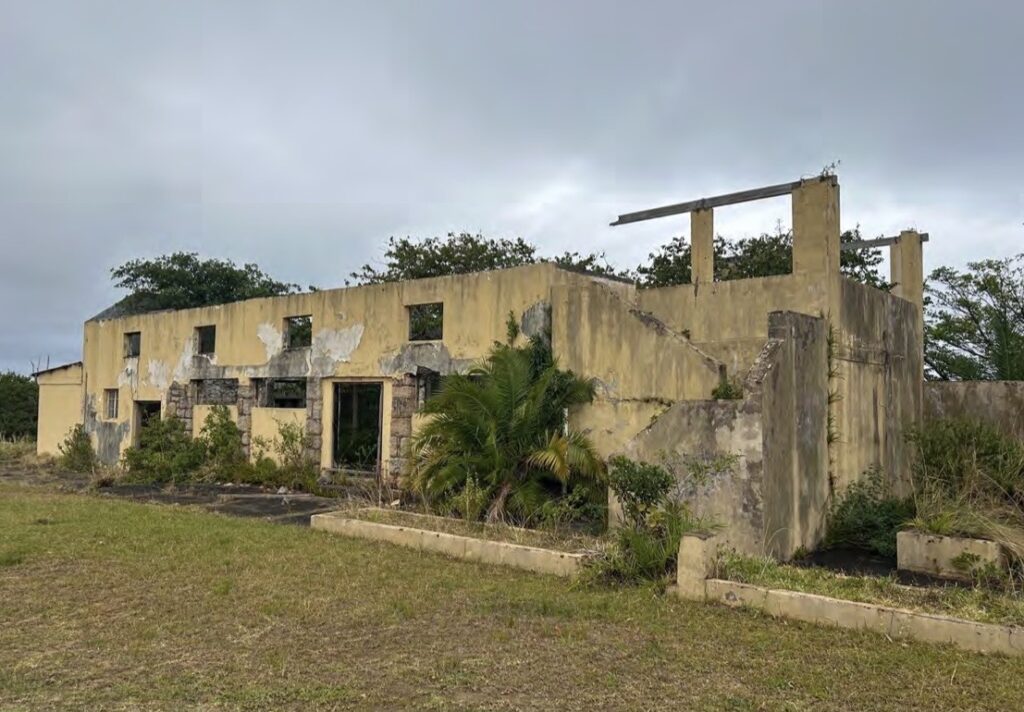
The EMS Foundation’s report documents systemic governance failures, chronic underfunding, infrastructure collapse, loss of biodiversity, commercialisation pressures, and the erosion of conservation mandates across numerous provincial reserves. These are not abstract concerns. They directly affect ecological integrity, animal welfare, public access to natural heritage, and long-term conservation outcomes. The Minister’s response does not dispute these findings; it simply avoids addressing them.
Second, while reference is made to a Ministerial Task Team (MTT) appointed in August 2023, the reply provides no timelines for completion, no interim findings, and no indication of urgent remedial action. Given the well-documented deterioration of provincial reserves, continued investigation without visible intervention risks becoming a mechanism for delay rather than reform.
Third, the reply to Question (2) acknowledges that failure of provincial reserves undermines revenue generation, investment, partnerships, and skills retention. However, the response fails to grapple with the deeper contradiction: the National Biodiversity Economy Strategy depends on functioning, ecologically sound protected areas. If core conservation management is collapsing, then expanding trophy hunting, game meat enterprises, and commercial wildlife derivatives — as proposed in the draft strategy — does not resolve the underlying governance crisis. It may instead intensify pressure on already weakened systems.
Notably, the Minister outlines plans to increase consumptive use of wildlife, including expanding trophy hunting and large-scale game meat harvesting, yet does not explain how such expansion will occur in provincial reserves that are already struggling with staffing shortages, financial instability, infrastructure decay, and compromised management effectiveness.
Fourth, the refusal to consider intervention powers on the grounds that environment is a concurrent function raises serious questions. While provinces do hold primary management responsibility, national government retains constitutional and legislative oversight duties. Where protected areas of national ecological significance are demonstrably failing, a passive stance is difficult to justify.
Finally, the response to Question (5) regarding Management Effectiveness Tracking Tool (METT) reports is troubling. These reports concern publicly funded protected areas and the state of national biodiversity assets. Requiring formal PAIA requests to access baseline management effectiveness data undermines transparency and weakens public oversight. In a context where provincial reserves are under scrutiny, proactive disclosure would strengthen credibility rather than diminish it.
South Africa’s provincial nature reserves are a cornerstone of the country’s biodiversity estate. The EMS Foundation report was compiled precisely because of mounting evidence that many of these reserves are in distress. The Minister’s response neither refutes the findings nor commits to immediate corrective action. Instead, it defers responsibility, deflects from the evidence, and prioritises future strategies centred on expanded consumptive use.
What is required is not procedural distancing from civil society research, but decisive leadership: transparent publication of management effectiveness data, clear timelines for the Ministerial Task Team’s report, targeted financial and governance interventions, and a recommitment to the primary conservation mandate of provincial reserves.
South Africa cannot build a biodiversity economy on a crumbling conservation foundation.
LINK TO EMS FOUNDATION REPORT: STATE OF SOUTH AFRICA’S PROVINCIAL RESERVES
Images ©EMS Foundation 2025.
EMS Foundation 2026. All Rights Reserved.
