


PUBLIC STATEMENT
Download Full Statement:
25 FEBRUARY 2026
PARLIAMENT MUST ENFORCE ITS OWN RESOLUTION: END THE CAPTIVE LION INDUSTRY NOW
South Africa stands at a constitutional, ethical and political crossroads.
Eight years ago, Parliament resolved that captive lion breeding and the lion bone trade should be reviewed with a view to ending the practice.
Cabinet reinforced this direction in 2024 by approving a revised Policy Position explicitly committing to close captive lion breeding for hunting and the lion bone trade .
Yet today, commercial exploitation of captive lions continues. This is not a policy gap. It is an implementation failure.
PARLIAMENT SPOKE CLEARLY IN 2018
Following the 2018 Colloquium on Captive Lion Breeding in South Africa, the Parliamentary Portfolio Committee found that the industry:
The Committee directed that:
This was not symbolic. It was a formal parliamentary directive.
Eight years later:
Parliament must now ask: Has its own mandate been ignored?
CONSTITUTIONAL DUTIES CANNOT BE DEFERRED
Section 24 of the Constitution requires the state to secure ecologically sustainable development while protecting the environment for present and future generations.
The Constitutional Court has recognised that animal welfare is constitutionally relevant within environmental protection jurisprudence.
An industry that:
cannot be rationally defended under sustainable development principles.
Continued tolerance of the captive lion industry is constitutionally suspect.
THE LION PROHIBITION NOTICE: A FIRST STEP – NOT THE END
Government announced in July 2025 that it was advancing a Lion Prohibition Notice to ban new captive lion breeding facilities and cub petting operations .
Parliament has now approved the Regulations and Draft Lion Prohibition Notice.
The EMS Foundation welcomes this critical first step. But let us be clear:
Without binding regulations, audits, enforcement action, transition funding and transparent timelines, the industry continues.
THE DEMOCRATIC ALLIANCE POLITICAL CAPTIVE LION INDUSTRY DILEMMA
The issue has become politically charged. Serious concerns have been raised about potential political conflicts of interest and policy reversals.
Regardless of cosy relationships, alignment with wildlife and hunting industries and party politics, one principle must prevail:
Parliament’s 2018 resolution remains binding in spirit and intent.
Wildlife governance cannot shift with political tides. It must be anchored in constitutional duty, scientific integrity and ethical governance.
THE OUTSTANDING QUESTIONS PARLIAMENT MUST NOW DEMAND ANSWERS TO
Parliamentarians must urgently require the Minister and Department to provide:
Without these, reform remains rhetorical.
SOUTH AFRICA’S REPUTATION AND CONSTITUTIONAL INTEGRITY ARE AT STAKE
South Africa cannot claim global conservation leadership while permitting:
The world is watching. Investors are watching. Ethical tourists are watching.
But most importantly, Parliament must watch.
A CALL TO PARLIAMENTARIANS
We call on Members of Parliament, across party lines, to:
Eight years is not a reasonable implementation period.
The phase-out must now move from policy promise to legal reality.
South Africa’s Constitution demands it.
Parliament’s 2018 resolution requires it.
The country’s conservation credibility depends on it.
End captive lion breeding. Fully. Transparently. Constitutionally. Now.
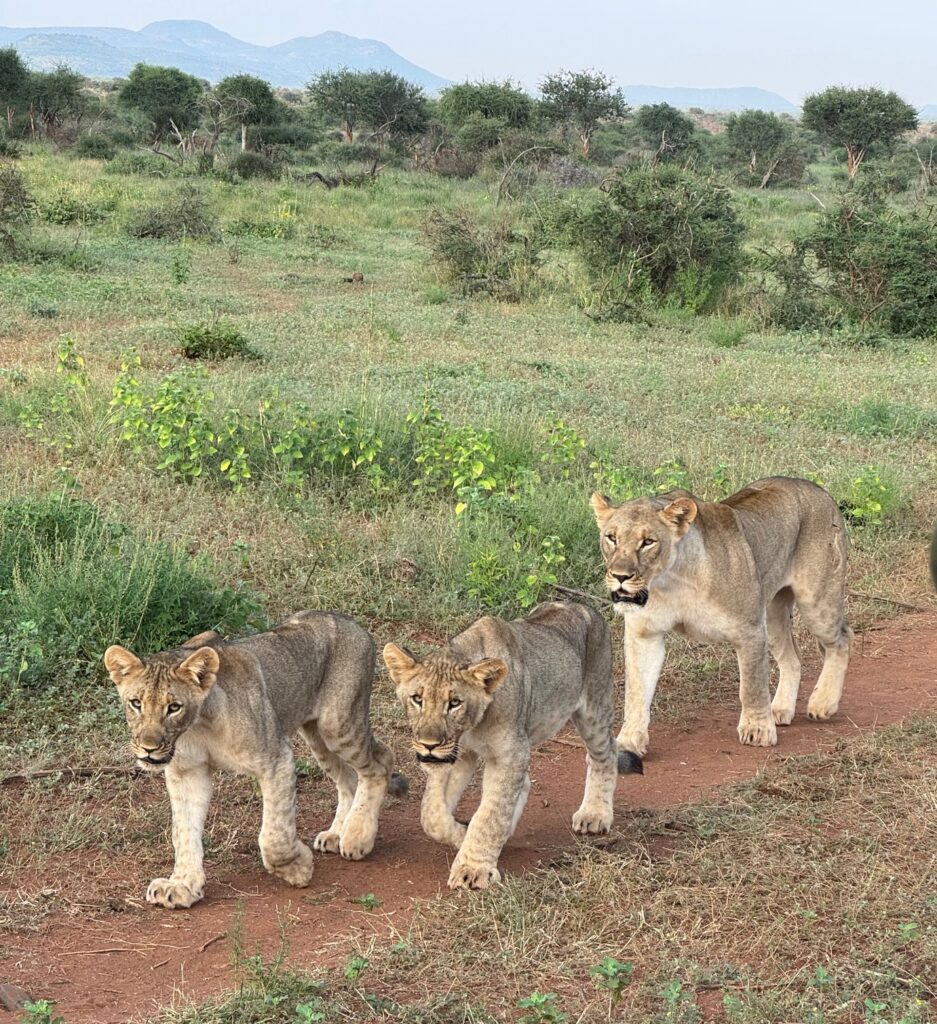
Image: ©EMS Foundation 2025 North West Province.
©EMS Foundation 2026. All Rights Reserved.
